Product name
CAS No.
Description
▶Ethylene glycol monomethyl ether
Ethylene glycol monomethyl ether
Ethylene glycol monobutyl ether is an organic compound with chemical formula C6H14O2. It is a colorless and transparent liquid, which is soluble in water, acetone, benzene, ether, methanol, carbon tetrachloride and other organic solvents and mineral oil.
▶Triethylene glycol monomethyl ether
112-35-6
Triethylene glycol methyl ether, used in organic synthesis. For advanced automotive brake fluid. Can also be used in organic synthesis, diluent.
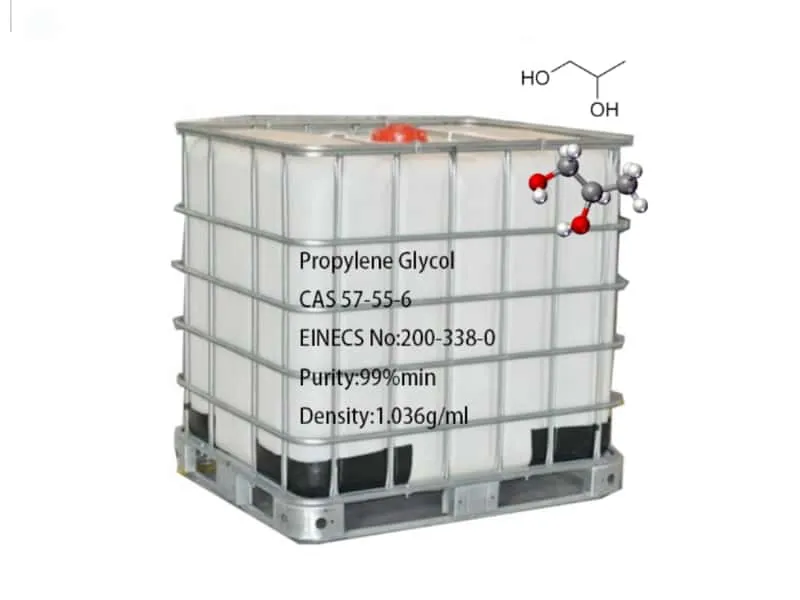
▶Propylene glycol(PGI)
57-55-6
Propylene glycol(CAS:57-55-6)1,2-Propanediol (CAS NO.57-55-6 ), also known as Propylene glycol, is a colorless, odorless, viscous, highly hygroscopic liquid with a faintly sweet taste. It is miscible with water, ethanol, ether, chloroform, acetone and other organic solvents. The solubility to hydrocarbons and chlorinated hydrocarbons is small, but it is strong than ethylene glycol. Propylene Glycol contains an asymmetrical carbon atom, so it exists in two optically active forms (dextrorotatory and sinistrorotatory isomers). And the commercial Propylene Glycol is a racemic mixture.
▶Polypropylene glycol(PPG)
25322-69-4
Polypropylene glycol(CAS:25322-69-4)The systematic name of Polypropylene glycol is Poly(oxy(methyl-1,2-ethanediyl)), alpha-hydro-omega-hydroxy-. With the CAS registry number 25322-69-4, it is also named as Methyloxirane homopolymer. The product's categories are Polymers; Ethers; Hydrophobic Polymers; Propylene Glycol; Poly(propyleneglycol); Alphabetic; Water Soluble Polymers. It is viscous colourless liquid which is soluble in water (low molecular weight ), aliphatic ketons, alcohols and other organic solvents, insoluble in ether and most of the aliphatic hydrocarbons. When use it, people should avoid contact with skin and eyes. Additioanlly, this chemical should be sealed in the container and stored in the cool and dry place. When heated to decomposition it emits acrid smoke and irritating fumes.
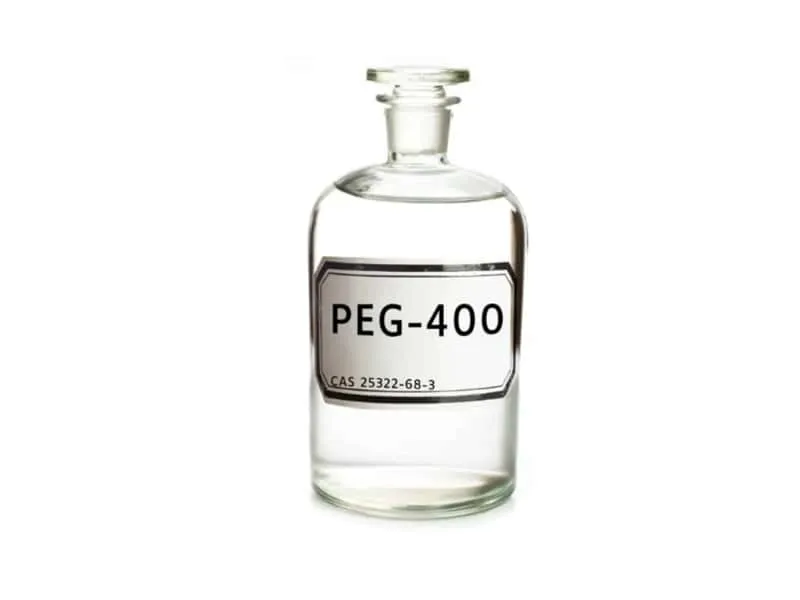
▶Polyethylene glycol200/300/400
25322-68-3
Polyethylene glycol200/300/400(CAS:25322-68-3)The Poly(ethylene oxide), with the CAS registry number 25322-68-3, is also known as 1,2-Ethanediol homopolymer. It belongs to the product categories of Polymers; Optimization Reagents; Protein Structural Analysis; X-Ray Crystallography; Cosmetic Ingredients & Chemicals; Gas Chromatography; Packed GC; Stationary Phases; Homobifunctional PEG; Poly(ethylene glycol) (PEG) and PEG Solutions; Poly(ethylene glycol) and Oligo(ethylene glycol); Essential Chemicals; Inorganic Salts; Materials Science; Poly(ethylene glycol) and Poly(ethylene oxide); Research Essentials; Solutions and Reagents. This chemical's molecular formula is C2nH4n+2On+1. This chemical is a polyether compound with many applications from industrial manufacturing to medicine.
▶Oxalic acid
144-62-7
Oxalic acid(CAS:144-62-7 )white transparent crystal combining wo crystal water, Melting point: 101-102ºC, Specific agravity: 1.653, easily sublimate at 100ºC, easily dissolve in alcohol and water.
▶Phosphoric acid
7664-38-2
Phosphoric acid (CAS: 7664-38-2 ) Phosphoric acid was prepared first by Robert Boyle in 1694 by dissolving phosphorus pentoxide in water. Phosphoric acid is probably the most important compound of phosphorus. It is the second largest inorganic chemical by volume, after sulfuric acid, marketed in the United States.
▶N-nonanoic acid
112-05-0
N-nonanoic acid (CAS: 112-05-0 ) Nonanoic acid (CAS NO.112-05-0) is used as intermediates of liquid crystals. It is also used in the preparation of plasticizers and lacquers and as a herbicide. The derivative 4-nonanoylmorpholine is an ingredient in some pepper sprays.

Tel: +86-0532-85801582
Email: sales@marchem.com.cn
Address: NO.88 chunyang road,Chengyang district,Qingdao,China
Copyright @ 2023 MarChem Co., Ltd.-Polyurethane,Solvent,Plasticizer,Alcohol,Flame Retardant Privacy Policy Designed by HuishangMedia